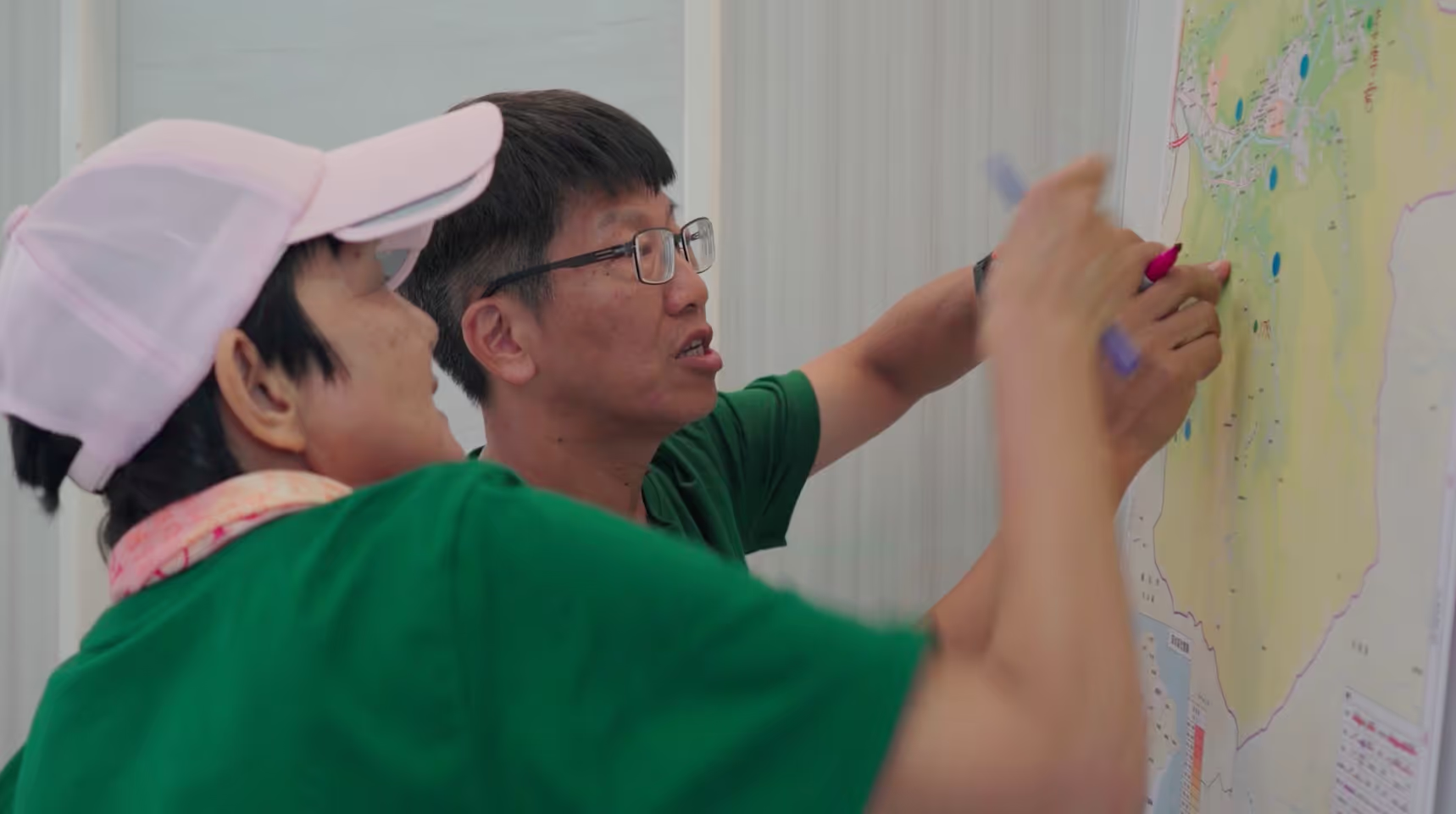

Explore the full journey, step by step.

Stage A: Enhance Your Climate & Heritage Literacy

Develop a foundational understanding of climate change and its implications for cultural and natural heritage, while situating your site or practice within a broader global context. Participants establish a shared knowledge base, clarify values and goals, and begin identifying key risks, stakeholders, and opportunities that will inform future adaptation efforts.

Section 1

Heritage Values Attributes & Stake Holders

3 Modules
1. Heritage, Values and Attributes
Lesson 1: Defining Heritage
Lesson 2: Understanding Heritage Values and Significance
Lesson 3: Articulating and Mapping our Values
Lesson 4: Attributes
Lesson 5: Values and Attributes In a Climate Change Context
2. Stakeholders and Rights holders
Lesson 1: Stakeholders and Rights Holders
Lesson 2: Stakeholder and Rights Holder Mapping
Lesson 3: Engaging Stakeholders
Lesson 4: Embedding Just Engagement
3. Plural Voices
 Lesson 1: A Plural Knowledge System Approach
Section 2

Climate Knowledge &
Systems

3 Modules
1. Climate Science
Lesson 1: What is Climate Change
Lesson 2: Causes of Climate Change
Lesson 3: Approaching Climate Science
Lesson 4: Unpacking Climate Hazards and Impacts
2. Heritage and Climate Change
Lesson 1: Role of Heritage in Climate Action
Lesson 2: Climate mitigation in heritage
Lesson 3: Climate adaptation in heritage
Lesson 4: Loss and Damage in heritage
3. An Introduction to Climate Risk
Lesson 1: What are Climate Impact and Risk Assessments
Lesson 2: The Risk Flower
Lesson 3: Climate Models and Scenarios
Lesson 4: Climate Data and Plural Knowledges
Lesson 5: Future Modelling
Section 3

Preparing for your Risk Assessment & Adaptation Strategy

2 Modules
1. Equitable Engagement
Lesson 1: Equitable Community Engagement
Lesson 2: Equitable Data Governance and Management
2. Establishing Capacities
Lesson 1: Current climate data collection and future modeling (2 videos)
Lesson 2: Establishing Capacity - Knowledge and Technical
Lesson 3: Establishing Capacity - Institutional and Administrative

Stage B: Complete a Community-Led Risk Assessment & Make an Adaptation Plan

Advance from foundational learning into structured planning by shaping an initial climate risk and adaptation pathway for your site or practice. Participants assess vulnerabilities, engage partners, define priorities, and outline a clear, locally grounded approach to guide near-term action and longer-term resilience.

Section 1

Design Your Climate Risk Assessment and Adaptation Plan

7 Lessons
Step 1: Big Picture, Indicators of Success, Risk and Adaptation Journey and Ethical engagement
Step 2: Map and Prioritize Places, Values, and Attributes
Step 3:  Explore Present Climate Hazards
Step 4: Assess Present Climate Impacts
Step 5: Explore Future Climate Hazards
Step 6: Assess Future Exploratory Climate Impacts
Step 7: Develop Comprehensive Risk Assessment and Adaptation Strategies
Section 2

Engaging Communities and Stakeholders in the Process

5 Lessons
Step 1:  Plan Logistics
Step 2: Ensure Ethical Practices
Step 3: Facilitate Conversations and Conflict Resolution
Step 4: Conduct and Manage Data Collection Strategically
Step 5: Put Design into Practice
Section 3

Analysing Climate Impacts, Risks and Adaptation Findings

4 Lessons
Step 1: Organize Your Notes and Recordings
Step 2: Apply Qualitative Data Analysis Approaches
Step 3: Complete Worksheets for Data Analysis
Step 4: Surface Draft Impact and Risk Statement
Section 4

Documenting Your Climate Risk Assessment and Adaptation Plan

2 Lessons
Step 1: Write your Risk Assessment
Step 2: Write your Adaptation Plan
Section 5

Validating Your Climate Risk Assessment and Adaptation Plan

1 Lessons
Step 1: Validate and Revise your Risk Statements and Adaptation Plans
Section 6

Communicate Your Climate Risk Assessment and Adaptation Plan

1 Lessons
Step 1: Communicate about your Risk Assessmand and Adaptation Plan

Stage C: Act

The third and final stage of the Heritage Adapts! action journey moves from planning into action. The guided action journey for Stage C will be available in June.

Moving from Planning to Action: Turning Strategies into Reality

Mobilizing Support: Funding, Resources, and Partnerships

Tracking Progress: Monitoring, Learning, and Evaluation

Shaping Systems: Policy Integration and Co-Benefits

Inspiring Change: Storytelling for Impact